Capacity
Assess the sustainable operating ceiling and the demands of current commitments.
A capacity-centered operating system for a life carrying multiple missions.
Your calendar shows what you’ve committed to. It doesn’t always reveal what those commitments cost. SWIM helps you assess capacity, establish protective boundaries, and build an operating rhythm that can support the work and life you’re actually living.

A career. A business. A family. A calling. Responsibilities that do not fit into neat, separate calendars. When every mission depends on the same limited capacity, doing more is not always the answer. Understanding the operating demands comes first.
Assess the sustainable operating ceiling and the demands of current commitments.
Establish enforceable rules around time, access, and scope to protect available capacity.
Build recurring operational patterns, structured work periods, maintenance, and review practices.
Capacity tells you what you can carry. Boundaries protect it. Rhythm helps you sustain it.
An hour of routine work and an hour of high-stakes decision-making do not cost the same. SWIM starts with what you have, weighs what you carry, and compares the two.
Author-developed reflective operating tools. Energy, fixed drain, and complexity weightings are estimates — not medical or psychological measures.
Explore the Governance ModelMadelyn Estes learned three words as a child: Float. Breathe. Move. Years later, her experience navigating professional demands, family responsibility, loss, and competing commitments informed a framework for building sustainable structure: Scale. WithIN. Means.
“Float. Breathe. Move. The first job is to stop sinking. The second is to stay alive long enough to think. The third is to choose a direction.”— SWIM Lessons, Chapter 13
“The same swim. Different waters.”— SWIM Lessons
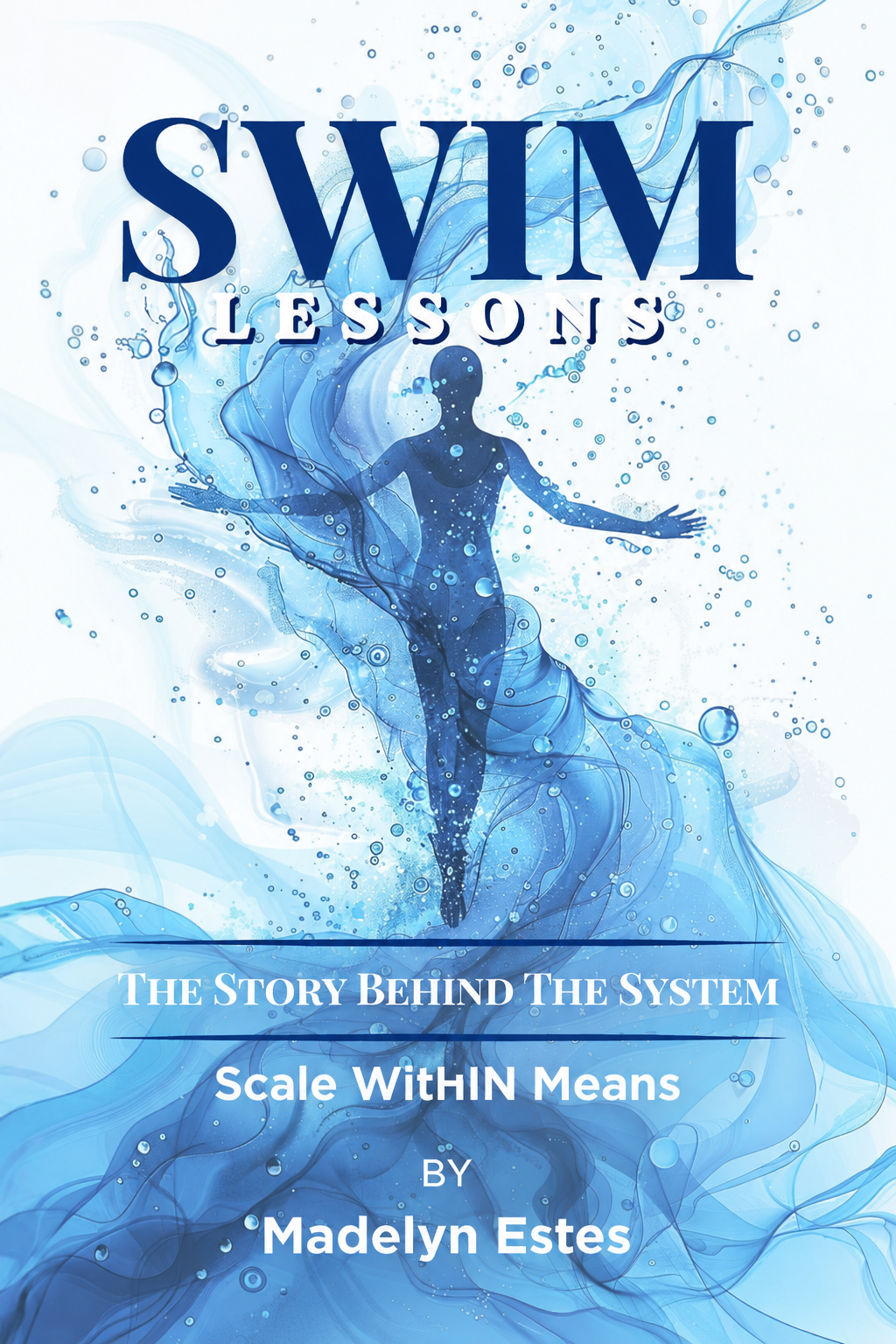
By Madelyn Estes
Part memoir. Part methodology. Part operating system.
Discover the experiences behind SWIM and the practical methodology that emerged from them. The book introduces the three pillars, Means Inventory, Governance Ratio, operational audits, boundary rules, and 30-Day SWIM Reset.
A MultiMissionaire is someone managing multiple missions at once — not someone who lacks focus. You will recognize the pressure pattern before you recognize the job title.
A full-time role, an aging parent’s appointments, and a weekend practice — three missions running on one calendar, with no single place where the full load is counted.
Several offers or projects, all technically alive, none getting the focused effort required to move — because none has been designated the priority.
Back-to-back meetings, decisions that wait on one person, and strategic work squeezed into the margins of a reactive week.
Illustrative pressure patterns drawn from SWIM Lessons — not client stories or outcome claims.
Madelyn brings enterprise operations experience and the SWIM framework into conversations about leadership capacity, sustainable growth, boundaries, and the hidden costs of competing demands.
Access the companion materials referenced in SWIM Lessons, including the Means Inventory, capacity and boundary audits, Default Week tools, and the 30-Day SWIM Reset.
Means Inventory, Capacity Audit, Governance Ratio, Boundary and Rhythm Audits.
Three Boundary Rules and the Default Week Planner.
SWIM Cycle Review and the 30-Day SWIM Reset tracker.
The whole framework on one printable card.